
.png)
The Reconnaissance of Grenache in South Australia
Angela Di Fabio
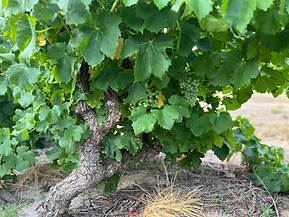

Since Grenache was first planted it has been a defining variety in South Australia’s viticultural identity. Though once overshadowed by bolder styles like Shiraz and Cabernet Sauvignon, Grenache has recently asserted itself as not just a local staple but a wine of finesse, distinction, and cultural relevance in Australia’s most storied wine state.
Grenache (known as Garnacha in Spain and widely planted across France’s Southern Rhône) arrived in Australia with European settlers in the mid-19th century, establishing early footholds in warmer South Australian soils. In the mid-1800s, the variety quickly proved well-suited to the Mediterranean-like climate around Adelaide.
Penfolds — one of Australia’s most iconic wineries — documented that Grenache cuttings sourced from Southern Rhône vineyards were among the earliest vines planted near their Magill Estate outside Adelaide. There, it served primarily in fortified wines popular at the time, contributing both volume and sweetness to port-style bottlings.
By the mid-20th century, Grenache had become Australia’s most widely planted red grape variety, largely because of its importance to fortified wine production. But things shifted dramatically from the late 1960s into the 1980s as consumer tastes moved toward dry table wines and the industry incentivised removal of older vines — including valuable Grenache bush vines — through state-backed vine-pull schemes. Unfortunately; the vine-pull scheme was applied with no varietal criteria or heritage protections, meaning that vines of high cultural and genetic value were bulldozed alongside genuinely underperforming blocks — essentially a blunt instrument responding to economic pressures without adequately recognising long-term viticultural value
Though plantings dwindled to a fraction of their former prevalence (now around 1 % of national vineyard area), South Australia retained most of the country’s historic old-vine stock.
Today, Grenache’s core home in Australia remains South Australia, with several regions contributing distinctive expressions:
McLaren Vale
Regarded by many as Australia’s spiritual home for Grenache, McLaren Vale offers old bush vines, deep sandy soils and a climate ideally balanced between warmth and maritime influence. Here, Grenache produces wines of silky red fruit, exotic spice and elegant structure. Old-vine sites like the Smart Vineyard (planted 1922) situated in the elevated Blewitt Springs are among the benchmarks for the variety nationally.
Barossa Valley
The Barossa boasts some of the oldest productive Grenache vineyards in the world, including centenarian bush vines. Barossa expressions tend to be lush and richly textured, with concentrated red fruit and white pepper notes — qualities that make them stand out both as standalone varietals and as the backbone of GSM blends (Grenache–Shiraz–Mourvèdre).
Clare Valley & Langhorne Creek
Clare Valley’s cooler ranges produces more refined, elegantly shaped Grenache, often used in blends for lift and savouriness.
Langhorne Creek contributes healthy, rich fruit from its fertile soils, increasingly bottled as varietal Grenache as well as blending stock.
Together, these regions show the breadth of terroir-driven styles available from a single variety across South Australia.
Stylistically, South Australian Grenache spans a spectrum from medium-bodied and perfumed to richer, more intense reds. In modern winemaking often earlier harvesting preserves acidity and produce wines with vibrant raspberry, cherry and strawberry fruit, balanced by spice, earth and fine tannins.
Key stylistic traits include:
-
Fruit Profile: Bright red berries (raspberry, cherry), sometimes with floral lift.
-
Secondary Notes: White pepper, dried herbs, spice and subtle earthiness.
-
Body & Structure: Light to medium weight but capable of richness, with silky tannins and moderate acidity.
Older barrels, concrete and other neutral vessels are widely used today to accentuate fruit purity and site expression, rather than overt oak character.
Grenache also features prominently in blends — particularly GSM — where its aromatic finesse balances Shiraz’s power and Mourvèdre’s savoury depth.
Grenache’s resurgence aligns with broader shifts in wine-drinking culture:
-
Changing Palates: Contemporary wine drinkers, particularly younger consumers, often seek styles that are lighter, more aromatic and food-friendly than deeply extracted heavy reds. South Australian Grenache fits this niche with its approachable savouriness and versatile pairing potential.
-
Rosé and Alternative Styles: Grenache rosés — increasingly popular — attract drinkers who prefer fresh, lower-tannin styles, helping introduce the variety to a broader audience.
-
Rediscovery of Old Vines: Wine enthusiasts and collectors now prize old-vine Grenache for its complexity and sense of place, reversing decades of neglect. Premium South Australian Grenache bottlings have begun to compete with shiraz and cabernet in quality competitions and critical reviews.
-
Everyday Drinking: At the same time, fruit-driven Grenache remains extremely drinkable and accessible — a medium-bodied red that suits casual meals as well as deeper tasting experiences.
From its early role as a backbone of fortified wine production to its present status as a celebrated varietal, Grenache in South Australia has undergone a remarkable renaissance. Today, old vines from the Barossa, McLaren Vale, Clare Valley and Langhorne Creek yield wines that combine heritage character with contemporary stylistic precision, appealing to both traditionalists and next-gen drinkers alike.

